

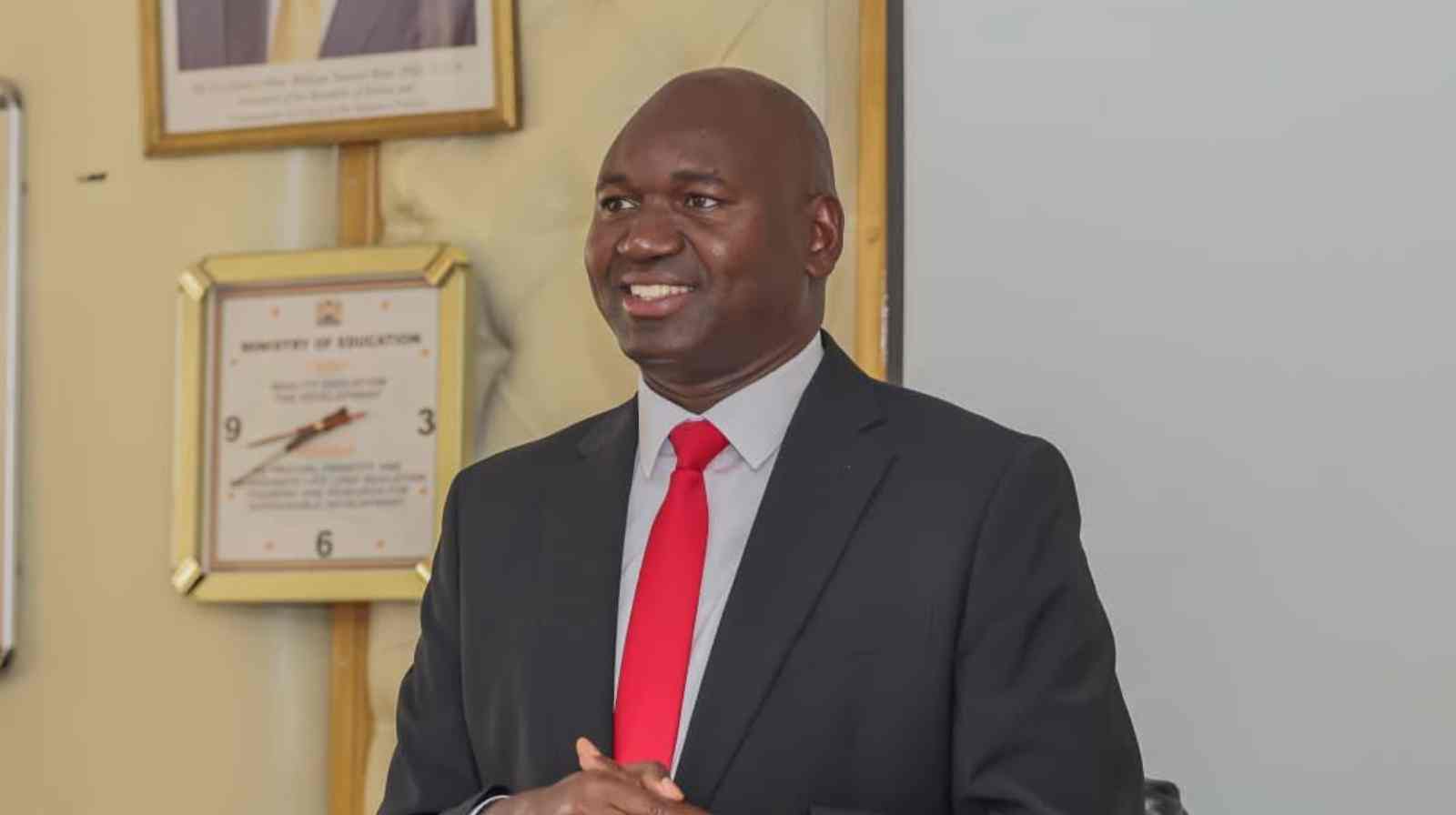
What Cost Prof Julius Bitok His Education Role Hours After Meeting Kindiki?
President William Ruto’s decision to reassign Principal Secretary for Basic Education Prof. Julius Kibet Bitok to the State Department for Tourism and Wildlife has sparked widespread debate, particularly because the move came at a time when the Ministry of Education was grappling with escalating school unrest across the country.
The reassignment was announced by Head of Public Service Felix Koskei on Tuesday, June 9, 2026, just hours after Prof. Bitok attended a high-level meeting convened by Deputy President Prof. Kithure Kindiki to discuss the growing crisis affecting learning institutions.
Prof. Bitok swapped positions with John Lekakeny Ololtuaa, who now takes charge of the State Department for Basic Education.
The timing of the reshuffle has raised questions about whether the move was linked to ongoing challenges in the education sector, criticism from lawmakers, tensions within the ministry, and public dissatisfaction over the handling of school unrest.
Meeting on School Unrest Preceded the Transfer
On Tuesday afternoon, Prof. Bitok accompanied Cabinet Secretary for Education Julius Ogamba to a meeting with Deputy President Prof. Kithure Kindiki at the Harambee House Annex.
Prof. Bitok attended the meeting in his capacity as Principal Secretary for Basic Education.
The meeting focused on finding solutions to a wave of unrest that has swept through schools across the country. According to official government figures, 204 schools had been affected by disturbances.
Following the meeting, Prof. Kindiki directed the Ministry of Education to strengthen school safety measures and enforce regulations aimed at preventing disruptions to learning.
The ministry was further instructed to develop mechanisms for stakeholder engagement and prepare proposals aimed at improving service delivery in schools and enhancing the safety of school communities.
However, approximately one and a half hours after the meeting concluded and officials had returned to Jogoo House, Head of Public Service Felix Koskei announced that President Ruto had reassigned Prof. Bitok to the State Department for Tourism.
The move represented the only Principal Secretary-level change in the reshuffle, unlike previous government reorganizations that have affected multiple Cabinet Secretaries and Principal Secretaries simultaneously.
Later that evening, the office of Education Cabinet Secretary Julius Ogamba announced a press briefing to address issues affecting the education sector.
Questions Emerge Over the Timing of the Reassignment
The sequence of events has prompted speculation regarding whether the President considered Prof. Bitok unsuitable to oversee the implementation of directives issued during the Deputy President’s meeting.
Although the government officially described the move as an administrative reassignment, the timing has fueled discussions about whether it was connected to the management of challenges currently facing the education sector.
Sources at Jogoo House have indicated that tensions had reportedly been growing between Cabinet Secretary Julius Ogamba and Prof. Bitok over the handling of emerging issues within the ministry.
Prof. Bitok has also faced criticism over allegations that he was increasingly focused on popularizing a potential political comeback in Uasin Gishu County, where he unsuccessfully sought the United Democratic Alliance (UDA) gubernatorial ticket in 2022.
Controversial Remarks on Student Unrest
Among the incidents cited by critics was Prof. Bitok’s statement suggesting that school principals should negotiate with students who were unwilling to sit examinations.
The remarks attracted criticism from various quarters, including Uasin Gishu Governor Jonathan Bii, who publicly dismissed the proposal as impractical.
Sources within the Ministry of Education later indicated that the announcement had caught senior ministry officials by surprise because no such policy position had been agreed upon.
Read Also: Teachers in C1, C2 and C3 Grades Set for Automatic Promotions Under New TSC Plan
“The government communicates through circulars and official documents. Have you seen such a circular?” a source within the ministry reportedly stated.
Prof. Bitok has also been accused of transferring some officials from the Immigration and Citizen Services Department to the Basic Education Department following his appointment, with reports suggesting that integration challenges emerged between the incoming officials and existing staff at Jogoo House.
School Unrest and Safety Concerns Intensified Pressure
The reassignment occurred against the backdrop of widespread school unrest that has affected nearly 200 schools across the country.
The disturbances included student protests, acts of indiscipline, destruction of property, and several school fire incidents that heightened concerns about safety in learning institutions.
As stakeholders called for urgent interventions, Prof. Bitok maintained that the situation did not warrant early closure of schools.
Speaking during a prize-giving ceremony at Kenya High School over the weekend, he dismissed calls for schools to break early for the half-term holiday.
According to Prof. Bitok, the incidents remained isolated and did not justify a nationwide response.
“From our records, less than one per cent of schools have experienced unrest. The rest are continuing with learning normally, so there is no justification for closing schools early,” Prof. Bitok said.
The half-term break is scheduled to begin on Wednesday, June 24, and end on Sunday, June 28, 2026.
COFEK Petition Added to Growing Pressure
Before the reshuffle, the Consumers Federation of Kenya (COFEK) had submitted a petition to the Public Service Commission seeking action against Prof. Bitok.
The petition cited allegations of gross misconduct, incompetence, abuse of office, violations of public finance management laws, and failure to address persistent challenges within the education sector.
Among the concerns raised were allegations relating to ghost learners, school management scandals, funding concerns, and inadequate safety measures in schools.
The petition added to mounting public scrutiny over the management of the State Department for Basic Education.
Persistent Challenges in the Education Sector
Prof. Bitok’s tenure at the Ministry of Education coincided with several challenges that attracted criticism from stakeholders.
These included:
- Delayed release of capitation funds to schools.
- Funding shortfalls affecting learning institutions.
- Teacher shortages across various regions.
- Infrastructure deficits in schools.
- Difficulties associated with curriculum reforms.
- Rising cases of student unrest and discipline-related concerns.
- Safety challenges within schools.
Although some of these issues predated his appointment, they contributed to perceptions that stronger interventions were needed within the education sector.
Criticism From Members of Parliament
Prof. Bitok also faced repeated criticism from Members of Parliament during his approximately 15-month tenure as Principal Secretary for Basic Education.
The most recent criticism emerged during a retreat attended by lawmakers, where several MPs accused him of being disconnected from realities affecting schools.
Legislators also complained about his repeated absence from meetings convened to discuss education policy and governance matters.
Read Also: TSC Reduces Teacher Job Titles from 13 to 8 in New Proposal
During a retreat in Naivasha, National Assembly Majority Leader Kimani Ichung’wah delivered one of the strongest public criticisms directed at the Principal Secretary.
“I dare say that you [Mr Ogamba] have the most clueless PS in the Ministry of Education. He only sits in Nairobi and has no idea what is happening on the ground,” Mr. Ichung’wah said.
Failure to Appear Before Parliamentary Committees
In February 2026, Prof. Bitok again came under scrutiny after failing to appear before the National Assembly Committee on Education to discuss the Budget Policy Statement for the State Department for Basic Education.
The Budget Policy Statement process is a critical exercise during which sectors analyze allocations proposed by the National Treasury for recurrent and development expenditure in the following financial year.
Committee Chairperson Julius Melly criticized the Principal Secretary’s absence, noting that it had affected parliamentary timelines.
“It is not the first time that he has failed to appear in this very important session. We are really saddened and our timelines are now over. We are supposed to present the Budget Policy Statement. We condemn the behaviour of the PS and, more importantly, the casual manner in which he is carrying out his work as a PS,” Mr. Melly said.
Mandera South MP Abdul Haro also called for disciplinary measures.
“I think we need to go back to the Standing Orders and find out the harshest punitive action that we can take against the PS so that he can be an example to others,” Mr. Haro said.
Luanda MP Dick Maungu similarly expressed concern regarding the Principal Secretary’s relationship with the Education Committee.
“We note with concern that since he came to this department, he has consistently failed to attend meetings for communication and consultation. This is not the first time; even last year, this committee summoned him regarding similar matters and he failed to appear,” Mr. Maungu said.
Mixed Reactions Following the Reassignment
Kitui Central Member of Parliament Makali Mulu questioned whether the reshuffle reflected a performance-based decision or a transfer of ineffective leadership.
“At a time of rising unrest in schools and efforts to restore normalcy in education, Kenyans deserve transparency. Are these transfers based on performance and competence, or is ineffective leadership simply being moved from one ministry to another?” Dr. Mulu said.
Read Also: TSC Says NO to School Heads Being Exempted From Teaching Duties
The reassignment has generated mixed reactions among education stakeholders and members of the public.
Some observers have viewed the move as an accountability measure following months of criticism, while others have argued that structural challenges facing the education sector require broader reforms beyond personnel changes.
What the Changes Mean for Education
Prof. Bitok leaves the State Department for Basic Education after serving for approximately 15 months, having been transferred from the State Department for Immigration and Citizen Services in March 2025.
His new assignment places him in the less prominent State Department for Tourism under the Ministry of Tourism and Wildlife.
Meanwhile, John Lekakeny Ololtuaa assumes leadership of the Basic Education Department at a time when the government is seeking solutions to school unrest, funding concerns, safety challenges, and stakeholder dissatisfaction.
With directives already issued by Deputy President Kithure Kindiki regarding school safety and stakeholder engagement, attention will now shift to how the new leadership at Jogoo House implements reforms aimed at restoring stability in schools and strengthening service delivery across Kenya’s education sector.
What Cost Prof Julius Bitok His Education Role Hours After Meeting Kindiki?
