

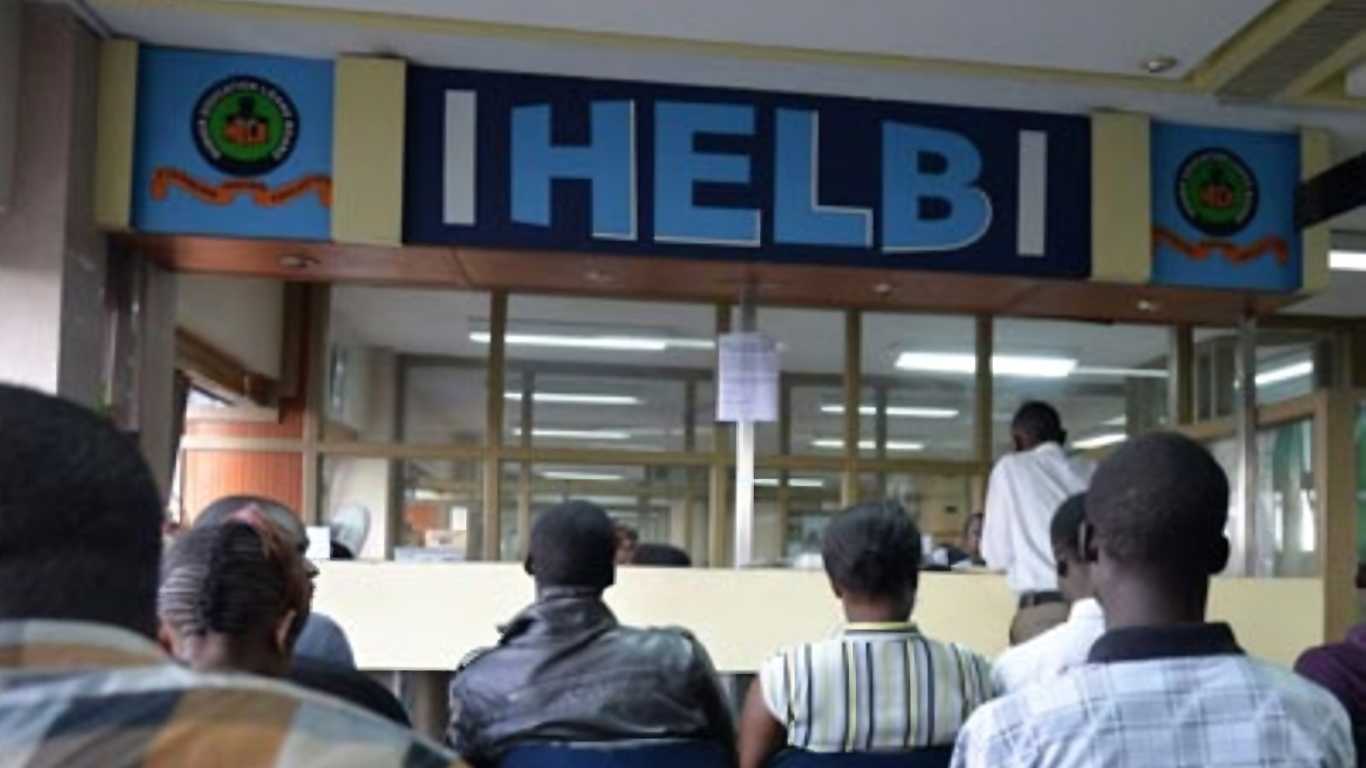
HELB Faces Sh57.65 Billion Funding Shortfall as Over 1.19 Million Students Seek Financial Support.
Thousands of students expected to join universities and Technical and Vocational Education and Training (TVET) institutions in September 2026 risk missing financial support from the Higher Education Loans Board (HELB) after the agency disclosed a significant funding deficit that threatens its ability to finance higher education.
Documents submitted by the Higher Education Loans Board to the National Assembly Committee on Education indicate that 1,199,423 students require financial assistance during the 2026/27 Financial Year. However, the board has only Sh56.71 billion available against a total funding requirement of Sh114.36 billion, resulting in a funding gap of Sh57.65 billion.
According to the board, the widening gap between student financing needs and available budget allocations remains the principal challenge affecting the implementation of its mandate.
“The major constant factor affecting HELB’s mandate remains the widening mismatch between student financing requirements and available budget allocations,” the board told the committee.
HELB Reports Persistent Budget Deficits
The Higher Education Loans Board informed the National Assembly Committee on Education that it has continued operating under budget deficits for the last four financial years despite a steady increase in the number of students requiring government financial assistance.
The board stated that it has appealed to Parliament and the National Treasury for additional financial support to enable it to meet the growing demand for higher education financing.
According to the documents presented, the funding constraints became particularly pronounced from the 2023/24 Financial Year, following increased enrolment under the revised higher education funding framework.
“The board continues to work closely with the Ministry of Education and the National Treasury to mobilise additional resources to sustain equitable access to higher education financing,” HELB stated.
Funding Gap Continues to Widen
HELB reported cumulative funding shortfalls amounting to Sh19.27 billion between the 2023/24 and 2025/26 Financial Years due to persistent budgetary constraints.
The board provided the following funding deficits:
- 2024/25 Financial Year: Sh10.694 billion funding gap.
- 2025/26 Financial Year: Sh18.58 billion funding gap.
- 2026/27 Financial Year: Sh57.654 billion funding gap recorded at the beginning of the financial year.
The board indicated that discussions with the Ministry of Education, the National Treasury and other stakeholders remain ongoing to secure additional financing.
“HELB continues to engage the Ministry of Education, National Treasury and stakeholders to address these challenges and enhance sustainability of higher financing,” the board noted.
HELB Identifies Three Major Operational Risks
The board informed Members of Parliament that the funding shortages have exposed its operations to three key risks:
- Financial risk.
- Liquidity risk.
- Operational risk.
According to HELB, these risks directly affect its ability to continue providing loans and bursaries to eligible students.
The board stated that it continues to monitor the risks through established governance structures, periodic risk assessments and targeted mitigation measures.
Student-Centred Funding Model Increased Demand
HELB attributed the increased financing requirements to the implementation of the student-centred funding model, introduced during the 2023/24 Financial Year.
According to the board, the new model significantly expanded access to government-funded higher education, increasing the number of students supported from 576,338 to 823,691 by the 2025/26 Financial Year.
Despite the increase in demand, HELB stated that tuition loans continued to be remitted directly to higher learning institutions, while upkeep loans were disbursed to eligible students within available budgetary resources.
However, the board disclosed that part of the assessed financing requirement amounting to Sh29.27 billion remained unpaid due to insufficient funding.
HELB Financial Performance in 2025/26
The documents tabled before the committee show that during the 2025/26 Financial Year, HELB received Sh45.66 billion, comprising:
- Sh40.9 billion from the National Exchequer.
- Sh4.7 billion generated through Appropriations-in-Aid (A-I-A).
In April 2026, the HELB Board of Directors revised its operational budget upward to Sh49.1 billion, citing anticipated improvements in loan recoveries following enhanced debt recovery measures.
During the same financial year:
- Total expenditure reached Sh48.6 billion against an approved budget of Sh47 billion.
- 823,691 university and TVET students received loans.
- 23,333 students received bursaries.
- 364,279 students were awarded loans under programmes supporting Science, Technology, Engineering, Mathematics, Innovation, Fisheries and Agriculture (STEMIFA).
The board stated that the STEMIFA financing programme supports the Government’s Bottom-Up Economic Transformation Agenda (BETA) and Kenya Vision 2030.
Higher Education Funding Model
Since 2023, students seeking government financial support have been applying through a joint application portal managed by the University Fund and the Higher Education Loans Board.
The information submitted through the portal is used by both institutions to assess household vulnerability and determine the level of financial assistance each student qualifies for.
Under the current higher education funding model, every student admitted to a public university qualifies for government financial support.
Students from the most vulnerable households receive the highest scholarship allocation, with the Government financing up to 55 percent of tuition costs, while the remaining amount is covered through student loans and household contributions based on assessed financial need.
President William Ruto Announces Review of Funding Model
On Tuesday, July 21, President William Ruto, speaking at State House, Nairobi, announced that all students who qualify for university education will receive full government funding.
The announcement signaled that the Government is considering reviewing the higher education funding model introduced in 2023.
The current funding framework has attracted criticism from students, who have argued that the model has limited access to preferred academic programmes because of funding allocations linked to household vulnerability assessments.
HELB Faces Sh57.65 Billion Funding Shortfall as Over 1.19 Million Students Seek Financial Support.
