

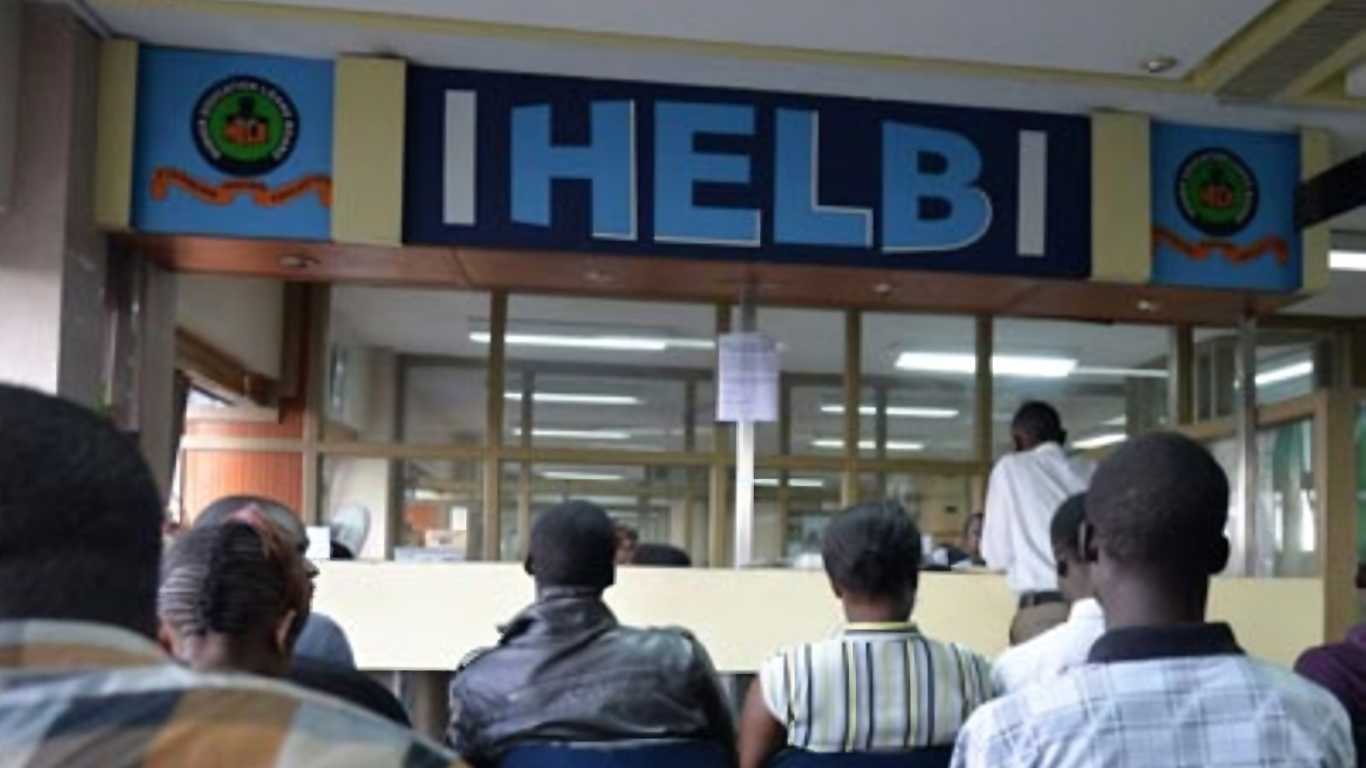
HELB Issues New Students Guidelines for Updating National ID Details on HEF Portal.
The Higher Education Loans Board (HELB) has issued guidelines explaining how students who applied for higher education funding as minors can update their National Identity Card (National ID) details on the Higher Education Fund (HEF) Portal after attaining the age of 18.
The guidance, first issued in a public notice on Friday, 11 July 2025, has continued to apply through the 2025/2026 and 2026/2027 application cycles, and remains directly relevant to students currently navigating HELB’s newly introduced dual-portal system.
The advisory applies to students who initially created their HEF portal accounts using their Kenya Certificate of Secondary Education (KCSE) index numbers, together with a copy of their birth certificate, because they had not yet reached the legal age required to obtain a National ID at the time they applied.
HELB Explains How Students Should Update Their National ID Details
According to HELB, eligible students should not create a new HEF portal account after obtaining their National ID cards. Instead, they are required to log into the existing HEF account that was originally created using their KCSE index number.
Once logged in, a pop-up notification prompting them to update their National ID information appears automatically. Students are required to:
- Log into the existing HEF portal account created using their KCSE index number, via portal.hef.co.ke (or hef.co.ke).
- Enter their National ID number.
- Enter their first name exactly as it appears on the National ID card.
- Click the “Validate” button.
- Wait for the confirmation pop-up indicating that the National ID has been successfully updated.
- Click the “Register” tab to complete the update process.
HELB stated that this procedure enables students to link their National ID information to the account they previously created, without opening another account. The Board has been explicit on this point in its public communication, stating directly: “Do not create a new account. Simply update the one you opened using your index number with your National ID details.”
HELB Warns Against Creating New HEF Accounts
The Higher Education Loans Board has repeatedly cautioned students against registering new HEF portal accounts after receiving their National ID cards. Instead, students should only update the accounts that were initially created using their KCSE index numbers while they were still minors.
The guidance is intended to prevent duplicate accounts and ensure that student records remain accurate within the Higher Education Fund system — a concern that has taken on added weight given the scale of HELB’s operations.
The Board’s portal system serves more than 391,000 students annually, disbursing over KSh 17 billion in loans, bursaries, and scholarships each cycle, and duplicate or mismatched records at this scale risk delaying disbursement for genuine applicants.
Why the Update Is Necessary
Many students complete secondary education before reaching the age of 18. As a result, they submit applications for higher education funding using their KCSE index numbers and a birth certificate before they become eligible to obtain National ID cards.
HELB’s application guidance confirms that students below the age of 18 are permitted to apply for loans and scholarships using their KCSE index number together with a copy of their birth certificate, in place of a National ID.
After receiving their National IDs, these students are required to update their personal details on the HEF portal to maintain accurate records and continue accessing higher education funding services without interruption.
The Two-Portal System: What’s New in 2026
Since the rollout of HELB’s revised funding model, students now interact with two distinct portals depending on their status:
- portal.hef.co.ke — used by new university and TVET students applying for the first time, including the intake processed following the 2025/2026 application window.
- helb.co.ke/loanees-portal — used by continuing students and returning TVET applicants for subsequent loan applications.
Continuing students may alternatively submit subsequent applications through the HELB Mobile App or by dialling the USSD code *642#, without needing to log into the web portal directly.
HELB opened its 2025–2026 First-Time and Subsequent Applications for Undergraduate and TVET Loans and Scholarships shortly before issuing the National ID update notice, targeting both new applicants — particularly the 2024 KCSE cohort — and continuing students.
The application requires applicants to submit, among other details: KCSE examination year and index number, KUCCPS programme code as shown on the admission letter, a valid email address, a mobile number for SMS verification, residential, primary school and secondary school details, university or TVET institution information, parent or guardian details, consent for processing of personal data, and preferred payment details for loan disbursement.
Common Application Pitfalls Beyond the ID Update
Alongside the National ID update process, HELB and education commentators have flagged several other recurring issues affecting the 2026/2027 application cycle that prospective and returning applicants should be aware of:
- Name mismatches between bank accounts and National ID records. HELB’s system will reject disbursement where the name on a bank account does not exactly match the name on the applicant’s National ID and KCSE registration (for example, an account registered as “John Mwangi” when the ID reads “John Mwangi Kamau”). Applicants are advised to confirm their bank account name matches their full ID name well ahead of disbursement.
- Phone numbers not registered in the applicant’s own name. Verification codes are sent only to numbers matching the applicant’s registered identity; using a borrowed SIM card can block verification entirely.
- Outdated bank details. Funds are disbursed strictly to the bank details on file, so any change of bank must be updated on the portal promptly.
- Incomplete supporting documentation. For dependent applicants, this can include both parents’ National ID copies, a death certificate where a parent is deceased, proof of guardianship where parents are separated, or a guardian’s ID plus a chief’s letter where the applicant lives with a non-parental guardian. A chief’s letter must generally be dated within three months of the application to be accepted.
- Guarantor availability. Applicants are advised to confirm in advance that chosen guarantors understand their role and will be reachable by phone during HELB’s verification calls.
Advisory Issued Amid Major Higher Education Funding Reforms
The HEF portal ID update guidance comes against the backdrop of one of the most significant restructurings of Kenya’s higher education financing system in decades.
The Presidential Working Party on Education Reform (PWPER) recommended a consolidation of the institutions currently responsible for tertiary funding and placement, and on 11 February 2026, the Cabinet adopted a package of related education reform bills, including what was then referred to as the Tertiary Education Placement and Funding Bill, 2024/2026, aimed at merging the Higher Education Loans Board, the Kenya Universities and Colleges Central Placement Service (KUCCPS), the Universities Fund, and the TVET Funding Board into a single authority described as a “one-stop shop” for student placement, loans, scholarships, and career guidance.
By July 2026, the proposal had been reframed and reintroduced to Parliament as the Tertiary Placement and Funding Bill, 2026, which proposes merging the Higher Education Loans Board (HELB), the Universities Fund, and the TVET Fund into a single institution, the Tertiary Education Funding Authority (TEFA).
If enacted, TEFA would become the primary institution administering student financing for universities, colleges, and Technical and Vocational Education and Training (TVET) institutions, replacing the current fragmented arrangement across multiple agencies. Beyond financing, TEFA would also be tasked with strengthening loan recovery mechanisms to ensure beneficiaries repay their loans after joining the workforce.
The Bill also proposes a fundamental shift in funding philosophy: moving from the income-based funding model introduced in 2023 — under which funding levels are tied to a household’s assessed financial need — to a universal funding approach, under which all eligible students admitted to public tertiary institutions would receive full government support covering tuition, accommodation, and living expenses.
Government is targeting rollout of the new funding framework from September 2026, and is seeking parliamentary approval of the Bill in time to support that timeline.
An Ongoing Point of Contention
The reform push has not been without friction at the highest levels of government. Following an announcement by President William Ruto on 21 July 2026 regarding the proposed shift to universal funding, a public disagreement emerged between the President’s office and the Ministry of Education over the framework’s financing basis.
Under Kenya’s legislative procedures, any Bill with significant financial implications must first receive Cabinet approval, committing government financing, before transmission to Parliament — and questions were raised over whether this step had been completed for the funding-model shift specifically.
For the 2026/27 financial year, the State Department for Higher Education received an allocation of KSh 164.1 billion, which Parliament has described as inadequate to fully support universities, scholarships, student loans, and infrastructure development, adding to scrutiny over how a fully universal funding model would be financed.
The Ministry of Education has stated that the proposed Bill would empower TEFA to mobilise resources beyond the national Exchequer, including private capital and non-traditional funding sources, to sustain universal coverage.
As of this writing, the Tertiary Placement and Funding Bill, 2026, remains before Parliament awaiting debate and approval.
HELB Urges Eligible Students to Update Their Details
HELB has advised all students who registered for the Higher Education Fund portal as minors to update their National ID details through their existing HEF accounts immediately after obtaining their National ID cards.
The Board has emphasised that updating the existing account, rather than creating a new one, will ensure that student records remain accurate and allow uninterrupted access to Higher Education Fund services — a step that carries added importance as the sector moves toward the consolidated TEFA framework, under which clean, accurately matched student records are expected to underpin eligibility verification going forward.
Frequently Asked Questions
Do I need to create a new HEF account once I get my National ID? No. HELB has explicitly warned against this. Log into your existing account (the one created with your KCSE index number) and update your National ID details there.
What happens if I already created a second account by mistake? HELB’s guidance does not describe an automated merge process for duplicate accounts; affected students should contact HELB directly through official support channels to resolve duplicate records before applying for further disbursement.
READ ALSO: Prof John Okumu Confirmed as KU Vice Chancellor
Can I still apply without a National ID? Yes — applicants below 18 may apply using their KCSE index number together with a copy of their birth certificate in place of a National ID.
Which portal should I use — hef.co.ke or the older HELB portal? First-time university and TVET applicants use the HEF portal (portal.hef.co.ke / hef.co.ke). Continuing students and returning TVET applicants generally use helb.co.ke/loanees-portal, the HELB Mobile App, or USSD code *642#.
Will the HELB–TEFA merger affect my existing loan? The Tertiary Placement and Funding Bill, 2026, remained before Parliament as of this writing, with no confirmed effective date for TEFA taking over HELB’s functions. Students with active loans or pending applications should continue following current HELB procedures, including this ID-update guidance, until any transition is officially communicated.
Why does my bank account name need to match my National ID exactly? HELB’s disbursement system verifies applicant identity by matching bank account names against National ID and KCSE registration records; a mismatch — even a missing middle name — can cause disbursement to fail or be delayed.
HELB Issues New Students Guidelines for Updating National ID Details on HEF Portal
