

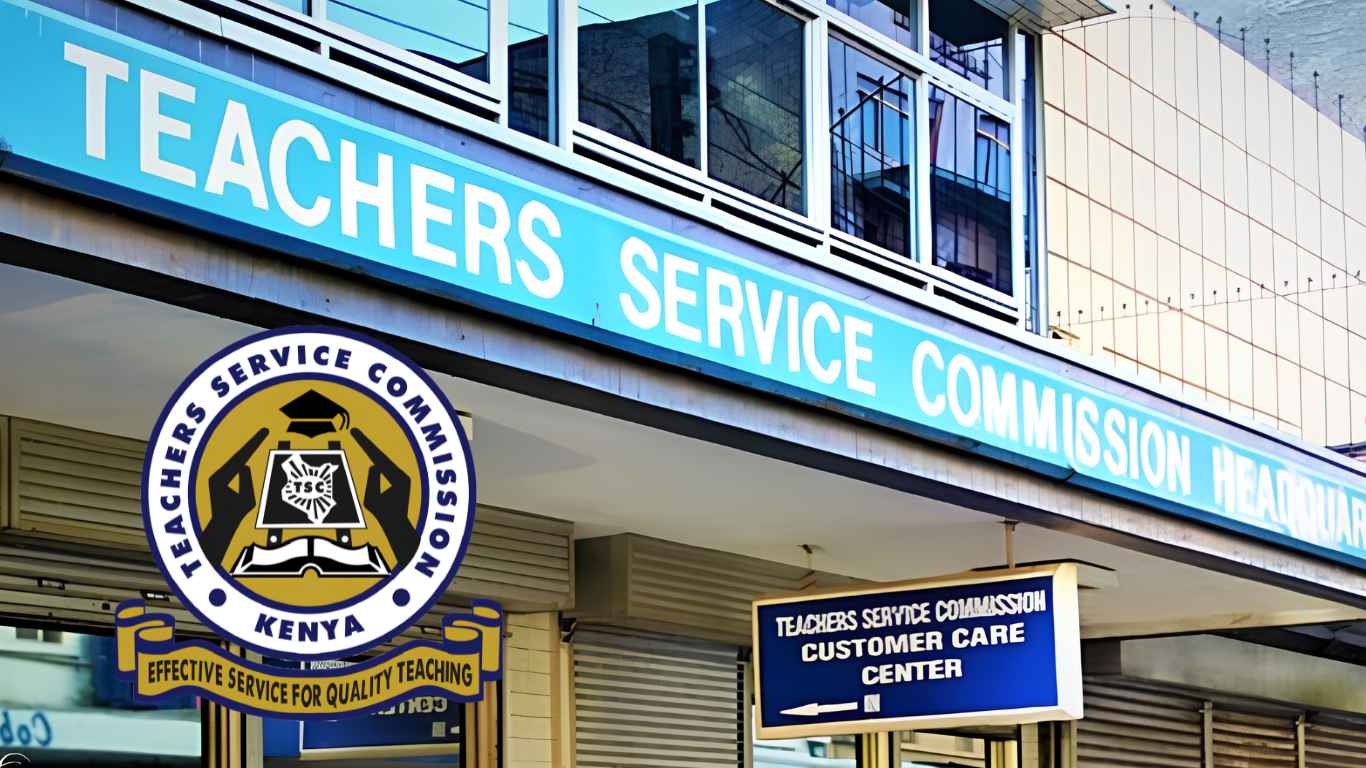
TSC Finally Raises Teachers’ Salaries—See the New Pay Rates.
Thousands of teachers employed by the Teachers Service Commission (TSC) will receive increased salaries beginning with the July 2026 payroll following the implementation of the second phase of the 2025–2029 Collective Bargaining Agreement (CBA).
The revised salary structure took effect on 1 July 2026 and provides monthly salary increments of up to KSh2,055 across various job grades.
The salary review forms part of the four-year Collective Bargaining Agreement signed between the Teachers Service Commission, the Kenya National Union of Teachers (KNUT), the Kenya Union of Post Primary Education Teachers (KUPPET), and the Kenya Union of Special Needs Education Teachers (KUSNET).
TSC Directs Immediate Implementation of Revised Salary Structure
In a circular dated 16 July 2026, the Teachers Service Commission directed all Regional Directors, County Directors and Sub-County Directors to immediately implement the revised salary scales.
According to the Commission, the revised salary structure will remain effective from 1 July 2026 to 30 June 2027, representing the second implementation phase of the current 2025–2029 CBA.
The Teachers Service Commission stated that the revised salary scales apply to all teachers in service as at 1 July 2026, with the exception of teachers serving on internship terms.
The Commission further directed that teachers will retain their existing job groups, job titles and incremental dates during the migration to the new salary structure.
According to the circular:
“This Circular shall apply to all teachers in service as at 1st July, 2026, except interns. This Circular is effective from 1st July, 2026 to 30th June, 2027. Teachers converting to the new salary scales will retain their current incremental dates. However, where the incremental date falls on 1st July, 2026, teachers will be granted their annual increment on the existing salary scales, then convert to the new salary points with effect from the same date.”
Teachers whose annual salary increment falls on 1 July 2026 will first receive their annual increment under the previous salary scales before being migrated to the revised salary points on the same date.
Salary Increases Vary Across Job Grades
The revised salary structure provides varying monthly increments depending on job grade and salary point.
Teachers serving under Grade C2 and Grade C3 are among the largest beneficiaries of the review.
The highest monthly increase of KSh2,055 will be received by Secondary Teacher I officers serving under Grade C3.
The lowest monthly increase, beginning at KSh693, will be received by Deputy Principals II.
Revised Salaries for Senior Administrative Teachers
Under the revised salary scales, teachers in senior administrative positions will receive the following salary ranges:
- Chief Principals (Grade D5 – T-Scale 15): KSh133,351 to KSh164,977, up from KSh132,365 to KSh163,758 under the previous salary structure.
- Senior Principals and Chief Curriculum Support Officers (Grade D4): KSh120,016 to KSh148,480.
- Principals and Deputy Principals I (Grade D3): KSh107,634 to KSh131,405.
- Deputy Principals II and Senior Headteachers (Grade D2): KSh93,883 to KSh114,322.
- Headteachers and Deputy Headteachers (Grade D1): Salaries have also been revised under the new salary scales in accordance with the approved structure.
The revised salary points apply while maintaining existing job grades and designations.
Existing Allowances Remain Unchanged
The Teachers Service Commission confirmed that the implementation of the revised salary structure does not affect teachers’ allowances.
The Commission stated that the following allowances will continue to be paid at the existing rates where applicable:
- House allowance
- Hardship allowance
- Commuter allowance
- Baggage allowance
- Annual leave allowance
- Disability guide allowance
No adjustments were announced for these allowances under the second phase of the 2025–2029 Collective Bargaining Agreement.
KNUT Welcomes Salary Review
The Kenya National Union of Teachers (KNUT) welcomed the implementation of the salary review while calling for reforms to future Collective Bargaining Agreement negotiations.
KNUT Deputy Secretary-General Hesbon Otieno stated that the union would pursue a shorter Collective Bargaining Agreement implementation cycle to allow teachers to negotiate improved terms more frequently.
He indicated that the matter had already been presented to President William Ruto during a recent meeting at State House and that further discussions would be held with the Teachers Service Commission and the Ministry of Education.
According to Hesbon Otieno:
“We are monitoring the implementation of the agreement and will immediately begin discussions on shortening the implementation phases. During our State House visit, we presented our concerns to the President, who agreed that the period for reviewing the CBA should be reduced.”
He further stated that although the salary increment provides some relief to teachers, it does not fully address the challenges affecting the profession.
“Any salary increment may not adequately address all the challenges teachers face, but it goes some way towards addressing their concerns.”
Teachers’ Unions Continue to Raise Sector Challenges
Teachers’ unions have continued to cite several issues affecting members despite the implementation of the revised salary structure.
Among the concerns raised are:
- Stagnant salaries over previous years.
- Rising cost of living.
- Delayed career progression.
- Chronic teacher shortages.
- Increased workloads.
- Delayed promotions.
- Inadequate medical cover.
- Prolonged acting appointments without corresponding benefits.
The unions have maintained that improvements in remuneration should be accompanied by enhanced working conditions to support teacher welfare and strengthen recruitment and retention within the education sector.
Read Also: Government Cracks Down on Illegal School Levies
Conclusion
The implementation of the second phase of the 2025–2029 Collective Bargaining Agreement marks the latest salary adjustment for teachers employed by the Teachers Service Commission. Effective from 1 July 2026, the revised salary scales introduce monthly pay increases across all eligible job grades while maintaining existing allowances and employment terms.
The salary structure will remain in force until 30 June 2027 as the Commission continues implementing the four-year agreement signed with KNUT, KUPPET and KUSNET.
TSC Finally Raises Teachers’ Salaries—See the New Pay Rates.
