

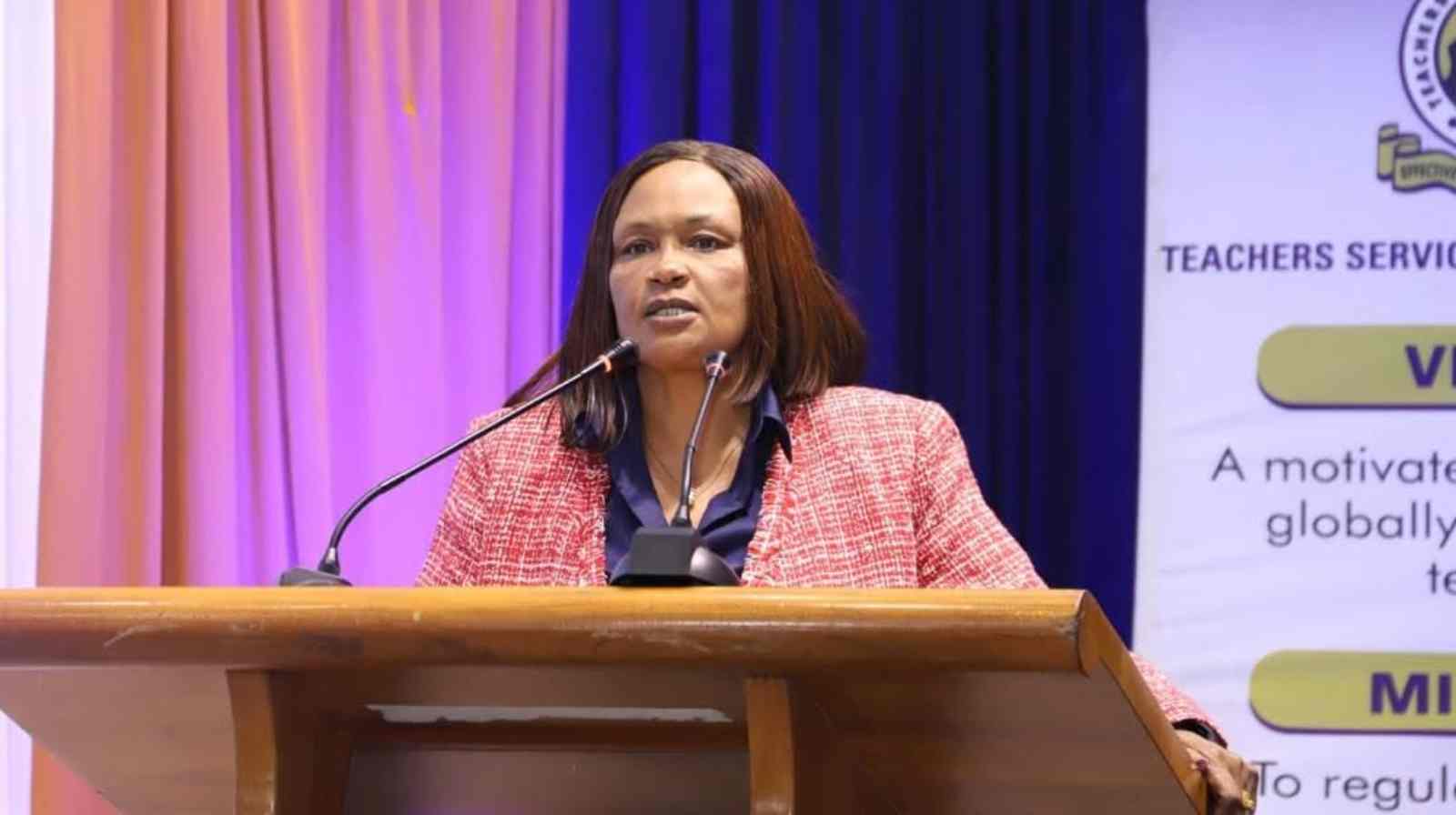
TSC Reduces Teacher Job Titles from 13 to 8 in New Proposal.
The Teachers Service Commission (TSC) has proposed a new Career Progression Guidelines framework for secondary school teachers and Special Needs Education (SNE) teachers, introducing a streamlined grading structure intended to replace the existing system implemented in 2018.
Under the proposed framework, the Commission has reduced the number of teaching designations from 13 to eight, establishing a career progression pathway ranging from Teacher 8 Secondary (ST 8) at the entry level to Teacher 1 Secondary (ST 1) at the highest level.
According to the proposed guidelines, teachers holding diploma qualifications will enter the profession at Grade ST 8, while teachers with bachelor’s degrees will be appointed at Grade ST 7.
The Commission has classified Grades ST 8, ST 7, and ST 6 as common cadre grades. Teachers within these grades will progress through the established career pathway without undergoing competitive promotion processes.
Progression beyond Grade ST 6 will be based on competitive promotion, with higher grades linked to institutional leadership and management responsibilities within secondary schools and Special Needs Education institutions.
Under the proposed structure, the eight grades are aligned as follows:
- Teacher 8 Secondary (ST 8)
- Teacher 7 Secondary (ST 7)
- Teacher 6 Secondary (ST 6)
- Teacher 5 Secondary (ST 5) – Senior Teacher
- Teacher 4 Secondary (ST 4) – Deputy Principal
- Teacher 3 Secondary (ST 3) – Principal
- Teacher 2 Secondary (ST 2) – Senior Principal
- Teacher 1 Secondary (ST 1) – Chief Principal
A teacher who progresses to Grade ST 1 will attain the designation of Chief Principal, which constitutes the highest level within the proposed secondary school teaching hierarchy.
The proposed framework marks a departure from the Career Progression Guidelines introduced in 2018, which established 13 distinct job groups and designations for secondary school teachers.
Under the current framework, career progression extends through multiple designations, including Secondary Teacher III, Secondary Teacher II, Secondary Teacher I, Senior Teacher II, Senior Teacher I, Deputy Principal III, Deputy Principal II, Deputy Principal I, Principal, Senior Principal, and Chief Principal.
The 2018 guidelines have been the subject of concern among stakeholders in the education sector due to the limited opportunities available for classroom-based teachers to advance to higher grades without assuming administrative responsibilities.
Under the existing structure, advancement to senior grades has largely been tied to management positions, including Deputy Principal and Principal roles. Consequently, teachers who remained in classroom instruction for extended periods often experienced slower career progression compared to colleagues who transitioned into school administration.
Read Also: Teachers in C1, C2 and C3 Grades Set for Automatic Promotions Under New TSC Plan
The proposed Career Progression Guidelines seek to establish a simplified grading structure for secondary school and Special Needs Education teachers by reducing the number of designations from 13 to eight while maintaining a defined pathway from entry-level teaching positions to senior institutional leadership roles.
The proposed changes are expected to form part of ongoing reforms by the Teachers Service Commission aimed at reviewing career progression pathways, grading structures, and promotion criteria for teachers serving in secondary schools and Special Needs Education institutions across the country.
TSC Reduces Teacher Job Titles from 13 to 8 in New Proposal.
